

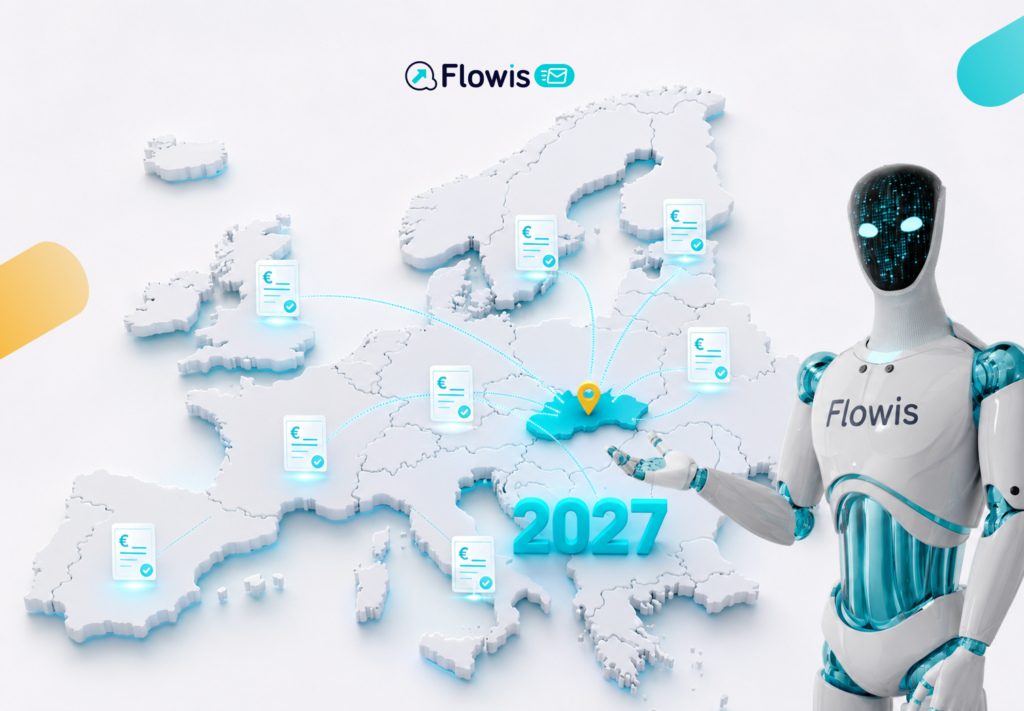
E-invoicing is not just a Slovak initiative. It is part of a broader European reform called ViDA – VAT in the Digital Age, which aims to adapt VAT rules to the digital economy.
The European Union is gradually moving towards companies exchanging invoices in a unified data format and tax administrations obtaining the necessary data electronically and faster. Slovakia is therefore introducing the e-invoicing system even before the launch of the mandatory cross-border regime across the EU.
What is ViDA?
ViDA is a set of European rules that modernize the functioning of VAT in member states. The reform was adopted in 2025, and its individual parts will be implemented gradually.
One of the most important changes is the introduction of electronic invoices and digital reporting of data for cross-border B2B transactions. From July 1, 2030, the new regime is to apply to supplies between businesses in different EU member states.
The goal is for data on cross-border transactions to be available to tax administrations much earlier than with today’s recapitulative statements. At the same time, electronic invoices will create the basis for more unified and automated invoice processing throughout Europe.
Why is Slovakia introducing e-invoicing as early as 2027?
The ViDA reform allows member states to introduce mandatory e-invoicing for their domestic transactions as well. Slovakia is taking advantage of this option and is preparing its own system, which is scheduled to start operating from January 1, 2027.
The first phase will focus mainly on domestic transactions, i.e., invoices between Slovak suppliers and Slovak customers.
Slovakia will thus create the necessary infrastructure, processes, and experience before the European rules are extended to cross-border B2B transactions from 2030.
The introduction of e-invoicing is intended to bring, in particular:
- a unified data format for invoices,
- less manual data entry,
- lower error rates in processing,
- faster exchange of documents,
- easier automation of accounting processes,
- better overview of invoice delivery,
- faster data availability for the tax administration,
- more effective detection of VAT fraud.
It is not just about changing the way an invoice is sent. The goal is to gradually digitalize the entire process, from issuance and delivery to processing in the accounting system.
What will the first phase in Slovakia look like?
From January 1, 2027, the Slovak regime is to apply to domestic transactions. VAT payers will issue invoices in a specified structured electronic format for designated domestic transactions.
Entrepreneurs and legal entities to whom such an invoice can be issued must also be able to receive it.
A digital postal service will be used for secure sending and receiving. It will ensure the delivery of the e-invoice to the correct recipient and its handover to the customer.
Can I send Slovak e-invoices to foreign customers as well?
Yes, it is possible to send an e-invoice to a foreign customer as long as they are connected to a compatible network, such as Peppol, and support the required format.
However, a distinction must be made between the technical possibility of sending an e-invoice and the legal obligation to do so.
The first phase of the Slovak system from 2027 is focused on domestic transactions. This means that the Slovak obligation will not automatically apply to all invoices issued to customers abroad.
For a foreign invoice, it will be necessary to consider:
- the customer’s country,
- local e-invoicing rules,
- the type of transaction,
- the supported data format,
- the way the foreign customer receives e-invoices.
A unified mandatory European digital reporting regime for cross-border B2B transactions will begin to apply from July 1, 2030. Until then, individual countries may have their own deadlines, rules, and technical requirements.
Does this mean that the same rules apply everywhere in Europe?
Not yet. Some European countries have already introduced mandatory e-invoicing, others are introducing it gradually, and others are still preparing for it.
The following may differ:
- the range of companies to which the obligation applies,
- the implementation deadline,
- the method of delivery,
- requirements for reporting data to the state.
ViDA is intended to gradually reduce these differences. Existing national digital reporting systems will have to align with the European model.
What role does the Peppol network play?
Peppol is an international network that enables the secure exchange of electronic business documents between organizations. Instead of building a separate connection with each customer or supplier, a company connects through a certified provider.
If both a Slovak company and its foreign business partner are connected to the Peppol network, an e-invoice can be delivered between their providers similarly to how an email is transferred between different email services.
Peppol thus creates a common technical foundation, thanks to which e-invoicing does not have to stop at Slovakia’s borders.
Why is it worth preparing now?
When choosing a digital postal service, it is therefore advisable to think not only about the Slovak obligation from 2027 but also about future trading within Europe. Support for the Peppol network, standardized formats, foreign requirements, and integration with existing corporate systems is important.
Slovak e-invoicing is the first step. However, the direction is European: more secure invoice exchange, more unified data, and processes that can be automated across countries.