From 1 January 2027, Slovakia’s mandatory e-invoicing rules will apply to specified domestic transactions in Slovakia: supplies of goods or services within Slovakia between locally established suppliers and business or legal-entity customers.
Businesses will need to be able to receive these e-invoices even if they are not VAT payers. This includes sole traders, small companies and nonprofit organizations. Private consumer purchases remain outside the mandate.
Who Must Receive E-Invoices in Slovakia, and Who Must Issue Them?
For domestic transactions covered by Slovakia’s mandate, the basic distinction from January 2027 is:
VAT Payer
Be able to receive e-invoices. Issue them for sales of goods or services in Slovakia to other businesses and legal entities where the mandate applies, unless a legal exemption applies.
Non-VAT Payer
Be able to receive e-invoices from suppliers required to issue them to you. You are not required to issue e-invoices yourself.
Individual Making a Private Purchase
Mandatory e-invoicing does not apply. You can continue receiving invoices as before.
Recipients also include nonprofits, civic associations, municipalities and schools that are separate legal entities. They do not have to run a business or be VAT payers to need e-invoice reception.
Participation in 2026 is voluntary. If the requirement applies to you, set up reception before the end of 2026 so you are ready for January.
Why Must Non-VAT Businesses Receive E-Invoices?
You may issue invoices to customers, but you also receive them from suppliers. Your supplier may be a VAT payer even if you are not.
If a Slovak VAT-paying supplier is required to issue an e-invoice for a domestic supply of goods or services to your business or organization in Slovakia, you need to be able to receive it. Receiving only two invoices a month does not remove that requirement.
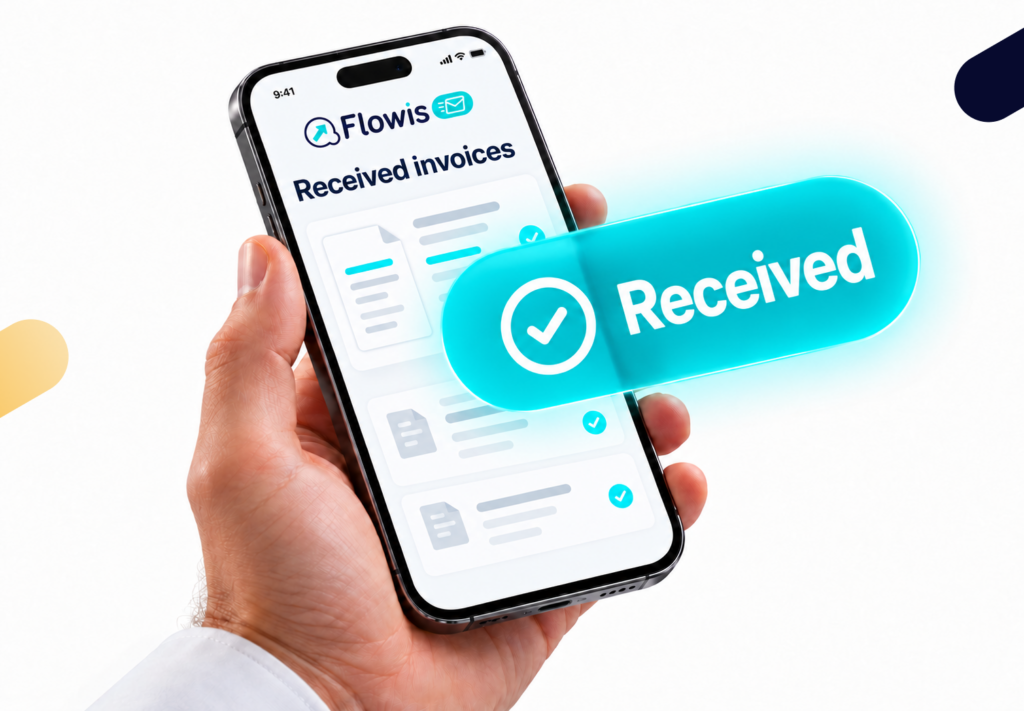
Under the new rules, an e-invoice contains data in a structured format that software can read. A PDF attached to an email is not enough. You therefore need a Peppol Access Point to receive e-invoices in an app or connected accounting system.
How Does It Work in Practice?
Examples for Non-VAT Businesses
A Mechanic Receives Invoices for Spare Parts
Martin runs a garage in Slovakia and is not a VAT payer. He buys spare parts from a Slovak wholesaler that is a VAT payer and receives a full invoice.
From January 2027, the supplier will issue an e-invoice for that purchase. Martin needs to be able to receive it. As a non-VAT business, he is not required to issue his own repair invoices in the new electronic format. If he repairs a car for an individual making a private purchase, mandatory e-invoicing does not apply to that repair.
A Florist Receives Electricity Invoices for Her Shop
Jana runs a flower shop in Slovakia and is not a VAT payer. The electricity contract for the shop is in her business name. Her Slovak electricity supplier is a VAT payer.
From January 2027, she will need to receive e-invoices for the shop’s electricity. Electricity supplied to her home under a private consumer contract falls outside this requirement.
An Example for VAT Payers
A Construction Company Issues and Receives Invoices
A construction company based in Slovakia is a VAT payer. It renovates offices for another Slovak company and issues an e-invoice for the building work. It also receives an e-invoice for construction materials from a Slovak supplier that is a VAT payer.
It needs both sending and receiving. However, when it renovates a bathroom for an individual in their private home, that job falls outside mandatory e-invoicing.
How Do You Get Started with E‑Invoices?
Get to know the Access Point Flowis app in our free webinar. This webinar is held in Slovak.
ACCESS POINT FLOWIS IN PRACTICE
“The webinar is very useful; it helped me understand e-invoicing. I appreciate being able to watch it again.”
Elena
Webinar participant
What Can You Continue Doing as Before?
Private Purchases Remain Outside the Mandate
You can continue delivering invoices to consumers by email or post, including bills for household energy and private phone services.
A Request for Payment Is Not Automatically an E-Invoice
A pro forma that does not create a VAT liability falls outside mandatory e-invoicing. If an advance payment is received and an invoice must be issued for it, that invoice will be an e-invoice where the legal conditions apply.
Certain VAT-Exempt Services Do Not Require Mandatory E-Invoices
Examples include some healthcare, education, insurance and financial services. The specific statutory exemption matters.
Simplified Invoices Remain Available
If a supplier issues a qualifying simplified invoice up to EUR 100 or an eKasa receipt up to EUR 400, including VAT, an additional e-invoice is not required for the same purchase. A low amount alone does not qualify a document for this exemption.
The Deadline for a Standard Domestic E-Invoice Remains 15 Days
The deadline runs from the supply of goods or services, or from receiving an advance payment. Summary invoices and corrective invoices have their own timing rules.